.png)
Key Takeaways
- Summer presents peak revenue opportunities but also heightened risks for Indiana businesses.
- Small business insurance in Indiana is crucial for protecting against seasonal threats.
- General liability insurance in Indiana is essential for covering customer injuries and property damage at events and during increased foot traffic.
- A Business Owners Policy (BOP) offers comprehensive coverage for property, liability, and business interruption during busy summer months.
- Workers comp in Indiana is mandatory for most employers, including those with seasonal and temporary staff.
- Understanding location-specific risks (metro, rural, college towns) is vital for tailored coverage.
- Local agents like AOG Group provide invaluable expertise and support for navigating Indiana's unique business landscape.
Table of Contents
- Introduction: Indiana's Vibrant Summer Business Landscape and the Importance of Adequate Insurance
- Understanding Peak Summer Risks for Indiana Small Businesses
- General Liability Insurance: Protecting Against Common Summer Claims
- Business Owners Policy (BOP): A Comprehensive Solution for Indiana Businesses
- Workers' Compensation: Essential for Seasonal Hires and Growing Teams
- Specialized Coverage for Seasonal Businesses: Festivals, Vendors, Food Trucks
- Regional Considerations Within Indiana
- Why Allstate Business Insurance with AOG Group in Indiana?
- Key Takeaways for Indiana Small Business Owners
- Call to Action: Schedule a Free Small Business Insurance Review with AOG Group Today
- Frequently Asked Questions
Indiana's Vibrant Summer Business Landscape and the Importance of Adequate Insurance
Summer in Indiana is alive with energy. Festivals fill city parks, food trucks line downtown streets, farmers markets draw weekend crowds, and small businesses across the state gear up for their busiest and most profitable months of the year. For many Hoosier entrepreneurs, the warm months represent a significant chunk of their annual revenue. That makes getting your small business insurance in Indiana right as summer arrives one of the smartest moves you can make.
The numbers tell a powerful story. Indiana is home to roughly 569,000 to 590,000 small businesses, which make up an astonishing 99.4% of all businesses in the state. These businesses employ around 1.2 million Hoosiers, or about 43% of all employees statewide. Between March 2023 and March 2024 alone, small businesses in Indiana added a net gain of 23,008 jobs, showing just how vibrant and growing this community is.
According to SBA Advocacy and IEDC (Indiana Economic Development Corporation), the economic impact of these small businesses is undeniable.
With so much economic activity concentrated in the summer months, the stakes for Indiana's small business owners are high. A single uninsured incident, whether it is an injury at a festival booth, a food-borne illness claim, damage from a summer storm, or a seasonal worker hurt on the job, can erase the profits from an entire busy season. That is exactly why understanding your business insurance in Indiana is so important before the summer rush begins.
Understanding Peak Summer Risks for Indiana Small Businesses
When summer arrives, so does a whole new set of risks. More customers, more events, more staff, and more outdoor activity all add up to greater exposure for Indiana small businesses, as highlighted by this Indiana small business insurance guide. Understanding where those risks come from is the first step toward protecting everything you have worked so hard to build.
Higher Customer Traffic and Crowd Density
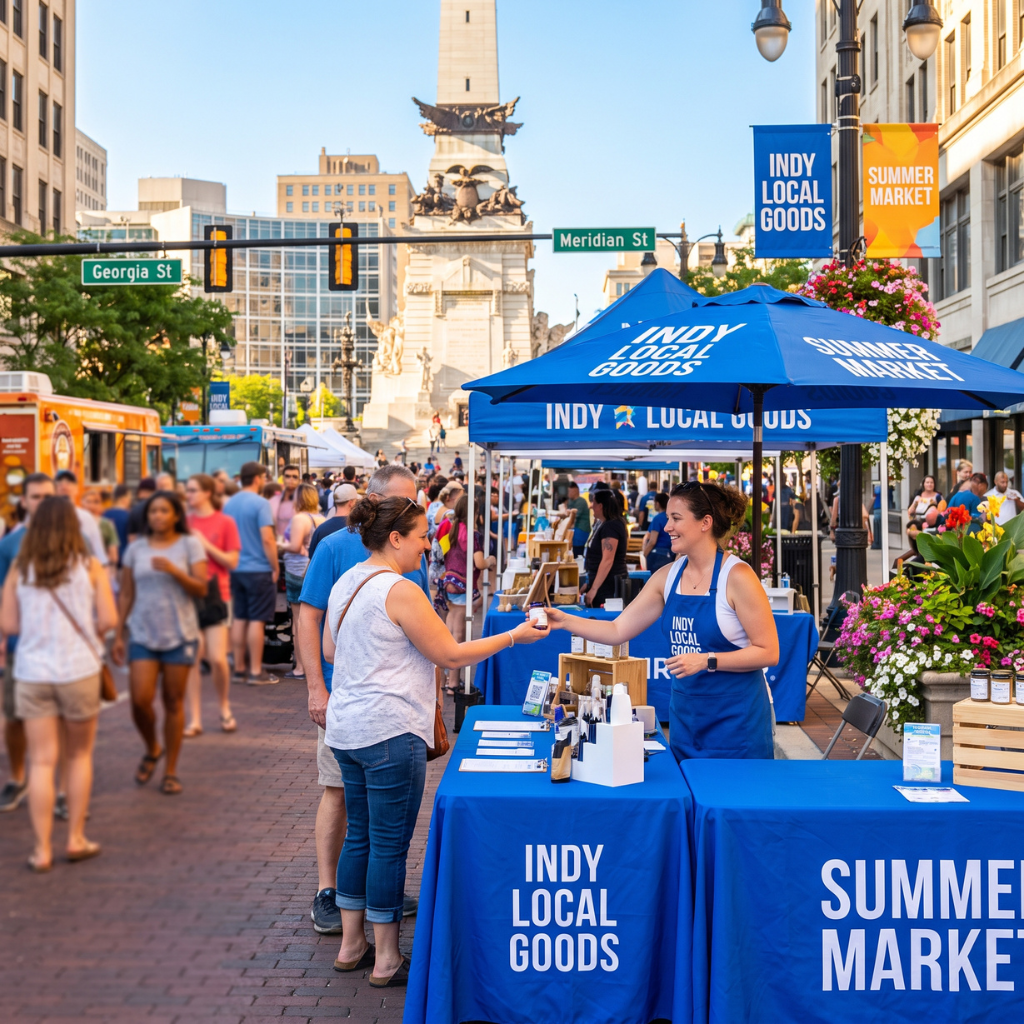
Festivals in Indianapolis, Carmel's arts and farmers markets, Bloomington events, county fairs, and outdoor concerts all bring large crowds to small business spaces. More foot traffic means more chances for slip-and-fall accidents, trip hazards from cords and displays, and crowd-related incidents. Retailers with sidewalk sales or outdoor seating also face increased liability from uneven pavement, wet surfaces, and alcohol-related situations.
This is where having solid general liability insurance in Indiana becomes absolutely essential. It acts as your financial safety net when a customer is injured or their property is damaged as a result of your business operations.
Weather-Related Damage to Outdoor Operations
Indiana summers are beautiful, but they can also bring severe thunderstorms, high winds, and hail. For outdoor vendors, food trucks, and event-based businesses, the risk of weather damage is very real. Tents can collapse. Signs can become airborne. Inventory can be soaked or destroyed. Equipment can be ruined by power outages.
BOP insurance in Indiana, which stands for Business Owners Policy, can help cover property damage, lost inventory, and even income lost during a weather-related shutdown.
Seasonal Hiring and New Worker Risks
Summer is the prime time to bring on extra help. But new and inexperienced workers are statistically more likely to get hurt on the job. Whether it is a summer retail hire lifting heavy boxes, a landscaping crew working in the heat, or a new kitchen worker at a festival food booth, the risk of workplace injuries rises with every new team member you add.
This is why workers comp in Indiana is such a critical conversation for business owners to have before the season starts, not after an accident happens.
General Liability Insurance: Protecting Against Common Summer Claims
What General Liability Insurance Actually Covers
General liability insurance in Indiana is one of the most important types of coverage any small business can carry. In simple terms, it protects your business when a third party, meaning a customer, visitor, or member of the public, suffers a bodily injury or property damage that is connected to your business operations.
It typically covers:
- Third-party bodily injury (someone gets hurt because of your business)
- Third-party property damage (your business accidentally damages someone else's property)
- Personal and advertising injury (claims like defamation or copyright issues in your marketing)
- Legal defense costs when a claim is made against you
Real-World Summer Claims Examples
For Indiana small businesses operating during the warm months, general liability claims can show up in many ways:
- A customer trips over an extension cord at your festival booth in Carmel and fractures a wrist. Your GL coverage can help pay for their medical expenses and your legal defense costs.
- A shopper slips on a wet floor inside your Indianapolis retail store during a summer sale event. Premises liability coverage responds to this type of claim.
- A customer becomes ill after eating food from your booth at a county fair. If they allege your food caused the illness, your products liability coverage, which is often part of your GL policy, can respond.
- Your tent breaks loose in a storm and damages another vendor's display or a parked vehicle. GL can cover damage your operations cause to other people's property.
Certificates of Insurance and Additional Insured Requirements
Here is something many first-time festival and market vendors do not know until the last minute: most Indiana events, municipalities, and venues will not let you set up without proof of insurance.
Seasonal business insurance in Indiana for event-based operations typically means you will need:
- A Certificate of Insurance (COI): This is a one-page document that proves you have active general liability coverage. Event organizers typically require limits of at least $1,000,000 per occurrence and $2,000,000 in aggregate.
- Additional Insured Status: The event organizer, city, or property owner is added to your policy so that your coverage extends to protect them for claims arising from your operations at their event.
- Hold-Harmless Agreements: Many vendor contracts require you to agree to protect the event organizer from liability, which makes having GL in place essential to back up that promise.
If you are scrambling to get a COI the night before a festival, you are already behind. Working with a local agent ahead of time means you can get these documents quickly and correctly.
Business Owners Policy (BOP): A Comprehensive Solution for Indiana Businesses
What Is a Business Owners Policy?
A business owners policy in Indiana, often called a BOP, is like getting a bundled package for your small business coverage. Instead of buying general liability and property insurance separately, a BOP combines them into one policy, often at a more affordable rate than purchasing each one on its own.
A standard BOP typically includes:
- General liability coverage for customer injuries and property damage
- Commercial property coverage for your building, equipment, inventory, and furniture
- Business income coverage that helps replace lost revenue if a covered event forces you to temporarily close
How a BOP Protects Indiana Small Businesses in Summer
BOP insurance in Indiana is particularly valuable during the summer months when revenue is at its peak and the consequences of a forced closure are most severe.
Here are some examples of how a BOP can work for Indiana businesses:
- Retail shop in Indianapolis: A summer thunderstorm breaks display windows and ruins merchandise. The property portion of the BOP covers repair and replacement costs. If the store must close during repairs, business income coverage can help replace the revenue lost during that time.
- Restaurant in Carmel with an outdoor patio: A kitchen fire damages the interior and forces the restaurant to shut down at the height of tourist season. The BOP covers fire damage to the property and can help with lost income and extra expenses like temporary setup costs.
- Event rental company in Bloomington: A storage unit housing tents and staging equipment is damaged by a severe storm before a big event weekend. The BOP's property coverage can respond to the loss of equipment, especially if it has been endorsed to include off-premises or mobile equipment coverage.
For many small business owners, a BOP is the smart all-in-one foundation that takes care of the basics efficiently and affordably.
Workers' Compensation: Essential for Seasonal Hires and Growing Teams
Indiana's Workers' Compensation Requirements
Workers comp in Indiana is not optional for most business owners. Indiana law generally requires employers to carry workers' compensation insurance for their employees. This coverage provides medical benefits and wage replacement when an employee is injured or becomes ill in the course of their work.
There are limited exceptions, such as for certain independent contractors or sole proprietors with no employees. But the key word there is "certain." The rules around who qualifies as a contractor versus an employee are strict, and getting it wrong can be very costly.
Seasonal Workers Are Still Your Employees
This is one of the most important points for Indiana small business owners to understand: hiring someone for the summer does not mean they fall outside your workers' comp obligations.
If you control when, how, and where a worker does their job, they are likely classified as an employee under Indiana law. That means they need to be covered under your workers' compensation policy, regardless of whether they work 10 hours a week or 50, and regardless of whether their employment lasts two weeks or six months.
Common summer industries where this comes up include:
- Food service and festival concessions
- Retail and boutique shops
- Landscaping and lawn care
- Construction and home improvement
- Event setup and breakdown crews
Common Summer Workers' Comp Claims in Indiana
New and seasonal workers face a higher risk of on-the-job injuries, especially in physically demanding summer roles. Common claims include:
- Heat-related illnesses: Outdoor workers in landscaping, construction, and event setup are vulnerable to heat exhaustion and heat stroke, especially during Indiana's hot and humid summer weeks. Workers' comp can cover medical treatment and lost wages.
- Lifting and strain injuries: Retail employees stocking shelves for summer sales and event crews handling heavy equipment frequently suffer back and shoulder injuries.
- Slips, trips, and falls: These happen in kitchens, warehouses, outdoor vendor setups, and anywhere cables, wet surfaces, or uneven terrain exist.
- Tool and equipment injuries: Landscaping equipment, power tools, and kitchen appliances all carry risks for workers who are new to using them.
Misclassifying seasonal workers as independent contractors to avoid carrying workers' comp is a serious risk. If an uninsured worker is injured and the misclassification is discovered, you could face significant penalties, uncovered medical and wage claims, and potential legal action. Simply put, seasonal does not mean optional when it comes to workers' compensation.
Specialized Coverage for Seasonal Businesses: Festivals, Vendors, Food Trucks
Food Vendor Insurance and Festival Vendor Coverage in Indiana
Indiana's festival and outdoor event scene is one of the state's most beloved summer traditions. From artisan markets in Carmel to food festivals in Indianapolis and university events in Bloomington, thousands of vendors set up shop each year to connect with customers and drive sales.
Food vendor insurance in Indiana and broader Indiana festival vendor coverage need to address a specific set of risks that standard business policies do not always cover automatically.
Typical coverage needs for festival and event vendors include:
- General liability that meets event minimums, usually $1 million per occurrence and $2 million aggregate
- Products liability for claims related to food-borne illness or merchandise injuries
- Property coverage for inventory, displays, and booth equipment
- Event cancellation coverage in some cases, if severe weather or other factors disrupt a key event
Many Indiana municipalities and universities require vendors to submit a COI that names the city or university as an additional insured. They may also ask for proof of workers' comp if you bring staff onto public property, along with compliance with health and fire codes.
Food Trucks: A Unique Set of Coverage Needs
Food trucks operating at Indiana fairs, downtown events, and farmers markets face a particularly layered set of insurance needs. Unlike a fixed restaurant, a food truck is both a vehicle and a business, which means the coverage requirements span two different types of insurance.
Key coverages for food truck operators include:
- Commercial auto liability for the truck itself. A personal auto policy will not cover a vehicle used for business purposes, so a commercial auto policy is essential.
- General liability and products liability for injuries and food-related illness claims
- Property coverage for cooking equipment and food inventory
- Business interruption coverage if a mechanical breakdown or fire sidelines the truck during peak months
Many event organizers in Indiana now require food trucks to show proof of both GL and commercial auto coverage before they can operate on event grounds. Having a knowledgeable agent who understands how to coordinate these policies together makes the process much smoother.
Landscapers, Contractors, and Outdoor Service Providers
Summer is peak season for landscapers, painters, home improvement contractors, and outdoor recreation businesses. Their coverage needs often include:
- General liability for property damage and bodily injury caused during work
- Completed operations coverage, which protects against claims arising after a job is finished
- Workers' comp for outdoor crews
- Commercial auto for work trucks, trailers, and equipment haulers
- Equipment coverage for mowers, trimmers, and tools whether they are on a job site or in transit
Regional Considerations Within Indiana
Why Location Matters for Commercial Insurance in Indiana
Indiana is not a one-size-fits-all state when it comes to business risk. Where you operate within Indiana shapes the kind of commercial insurance in Indiana that makes the most sense for your business.
Here is how risk and coverage needs vary by region:
Indianapolis and metro suburbs (Carmel, Fishers, Noblesville)
- High density of retail, hospitality, arts events, large festivals, and conventions
- Downtown events and sporting events create strong demand for GL and BOPs
- Higher property values and rents mean BOP limits need to reflect the true cost of a loss
Bloomington and college towns
- Seasonal swings tied to university schedules create heavy summer event and tourism activity
- High turnover among part-time student workers increases workers' comp complexity
- University-hosted events often carry strict vendor insurance requirements
Northern Indiana and lake regions
- Tourism around lakes drives marinas, boat rentals, vacation rentals, and seasonal restaurants
- Higher exposure to water-related liability including docks, slips, and falls
- Weekend tourist surges increase liability exposure in short bursts
Rural areas and small towns
- More agriculture, small manufacturers, and local service contractors
- Seasonal and temporary workers in food production and agriculture create unique workers' comp considerations
Whether you are a festival vendor in Bloomington, a boutique owner in Carmel, or a landscaper working rural Indiana, your coverage should reflect where you work and who you serve.
Why Allstate Business Insurance with AOG Group in Indiana?
A Local Partner Who Speaks Plain English
Insurance can feel overwhelming, especially for first-time business owners or those who have never had to navigate a claim or request a COI before. Allstate business insurance in Indiana through AOG Group is built around a simple idea: you should be able to understand exactly what you are covered for and why it matters.
AOG Group translates insurance into everyday language:
- "If a customer falls at your booth, here is what happens..."
- "If your freezer fails during a summer storm, here is what your policy covers..."
- "If your summer hire gets hurt on the job, here is how we handle it..."
That kind of clarity matters when you are trying to run a business, not study a policy document.
Local Knowledge of Indiana's Business Rhythms
A local agent who understands Indiana's festival calendar, permitting trends, and venue requirements brings real value that an online quote engine cannot. AOG Group agents can:
- Anticipate when you will need COIs and get them issued quickly for upcoming events and markets
- Help you properly report seasonal staffing so your workers' comp coverage stays accurate
- Right-size your property and business income limits to reflect your actual summer peak revenue
- Flag insurance clauses in vendor contracts and leases that could shift financial risk onto your shoulders
Tailored Packages for Every Type of Indiana Small Business
No two businesses are exactly alike. AOG Group helps you build a coverage package that fits how you actually operate:
- GL + BOP for storefronts and retailers
- GL + commercial auto for food trucks and mobile service providers
- GL + BOP + workers' comp for growing businesses with seasonal employees
- Specialty event coverage for vendors, caterers, and seasonal operations
Think of AOG Group as your summer readiness partner. Before the season, they review your exposures and make sure your limits are right. During the season, they respond quickly when you need documentation or have a question. After the season, they help you adjust your coverage for the quieter months ahead.
Key Takeaways for Indiana Small Business Owners
Summer represents enormous opportunity for Indiana's small business community. But with higher revenue comes higher risk. Here is a quick summary of what every Indiana business owner should have in place before the busy months begin:
- General liability insurance is the foundation. It protects you against customer injuries, property damage to others, and product-related claims. It is also required by most Indiana festivals, markets, and event venues before you can participate.
- A Business Owners Policy (BOP) combines liability and property coverage into one affordable package. It also provides business income protection if a covered event forces you to close temporarily during your peak season.
- Workers' compensation is generally required by Indiana law if you have employees, and that includes seasonal and part-time summer hires. Misclassifying workers to avoid coverage is risky and can lead to serious financial and legal consequences.
- Specialized coverage matters for food trucks, festival vendors, landscapers, and event companies. Standard policies may not automatically address all your exposures, so tailored coverage is worth the conversation.
- Where you operate in Indiana shapes your risk. Metro areas, college towns, lake regions, and rural communities each come with their own insurance considerations.
- AOG Group with Allstate business insurance in Indiana provides local, plain-English guidance that helps you get the right coverage before the season starts, not after something goes wrong.
Schedule a Free Small Business Insurance Review with AOG Group Today
The summer season will not wait, and neither should your insurance review. If you are heading into festival season, bringing on summer staff, operating a food truck, or simply want to make sure your current coverage is enough to protect your busiest months, now is the time to act. Visit AOG Group's small business insurance page today.
AOG Group is here to help you:
- Review your current coverage and identify any gaps before the summer rush
- Make sure your workers' comp policy correctly covers your seasonal team
- Get your Certificates of Insurance ready for upcoming events, markets, and venues
- Build a coverage package that fits your business, your budget, and your community
Do not let an uncovered claim undo everything you are working toward this summer. Reach out to AOG Group today to schedule your free small business insurance review and go into the busy season with confidence.
Frequently Asked Questions
What type of insurance do I need for a summer festival booth in Indiana?
For a summer festival booth, you will definitely need general liability insurance. Most event organizers require coverage of at least $1 million per occurrence and will ask to be named as an "additional insured" on your policy. If you are selling food, make sure your policy includes products liability coverage.
Do I need workers' compensation for temporary summer employees?
Yes, in most cases, Indiana law requires employers to carry workers' compensation insurance for employees, regardless of whether they are seasonal or temporary. The key is whether you control their work; if so, they're likely considered employees.
How does severe summer weather in Indiana affect my business insurance?
Severe summer weather (thunderstorms, high winds, hail) increases risks of property damage and business interruption. A Business Owners Policy (BOP) can cover damage to your property and inventory, and often includes business income coverage to help replace lost revenue if you have to close due to a covered event.
Is a personal auto insurance policy enough for my food truck?
No, a personal auto policy will not cover vehicles used for business purposes. Food trucks require a specific commercial auto insurance policy, which covers liability and damage to the vehicle when used for your business operations. This is separate from your general liability covering incidents related to your food service itself.
What is a Certificate of Insurance (COI) and why do I need it?
A Certificate of Insurance (COI) is a document that provides proof of your insurance coverage. Many event organizers, landlords, or clients will require a COI before you can participate in an event or work on their property. It assures them you have adequate coverage and helps manage risk.