
Key Takeaways
- Indiana roads become significantly more dangerous during fall deer season, with over 14,000 deer-vehicle collisions annually.
- Many drivers mistakenly believe "full coverage" automatically includes deer collision protection; however, it *depends* on whether your policy has comprehensive car insurance.
- Comprehensive car insurance is crucial for covering damage from a direct deer strike, while collision coverage typically applies if you swerve to avoid a deer and hit an object.
- Liability-only insurance offers no protection for your own vehicle in a deer collision, leaving you fully responsible for repair costs.
- Repair costs from deer accidents can reach up to $10,000, making comprehensive coverage a financially sound choice.
- Knowing your car insurance deductible in Indiana and how a deer claim might affect your premiums is essential.
- AOG Group offers a free auto coverage review to ensure you are adequately protected before peak deer season.
Table of contents
- Indiana Deer Season Driving: Is Your Car Insurance Ready for a Deer Collision?
- Is Your Comprehensive Car Insurance Indiana Policy Prepared for Deer Season?
- What Happens When You Hit a Deer in Indiana? Comprehensive vs Collision Coverage Explained
- Why Comprehensive Coverage is Crucial for Indiana Drivers: Deer Collision Insurance Explained
- The Risks of Liability-Only Insurance During Indiana Deer Season
- Understanding Your Car Insurance Deductible in Indiana and How Deer Claims Affect Your Premiums
- Steps to Take After a Deer Collision in Indiana: Your Deer Accident Claim Guide
- How AOG Group Can Help: Free Auto Coverage Review for Indiana Drivers
- Current Indiana Law and Insurance Requirements: What You Need to Know About Deer Strike Coverage
- Allstate's General Policy on Deer Strike Claims: What Indiana Drivers Should Know About Allstate Comprehensive Coverage
- Conclusion: Protect Yourself This Fall With the Right Deer Collision Insurance Indiana Drivers Need
- FAQ
Is Your Comprehensive Car Insurance Indiana Policy Prepared for Deer Season?
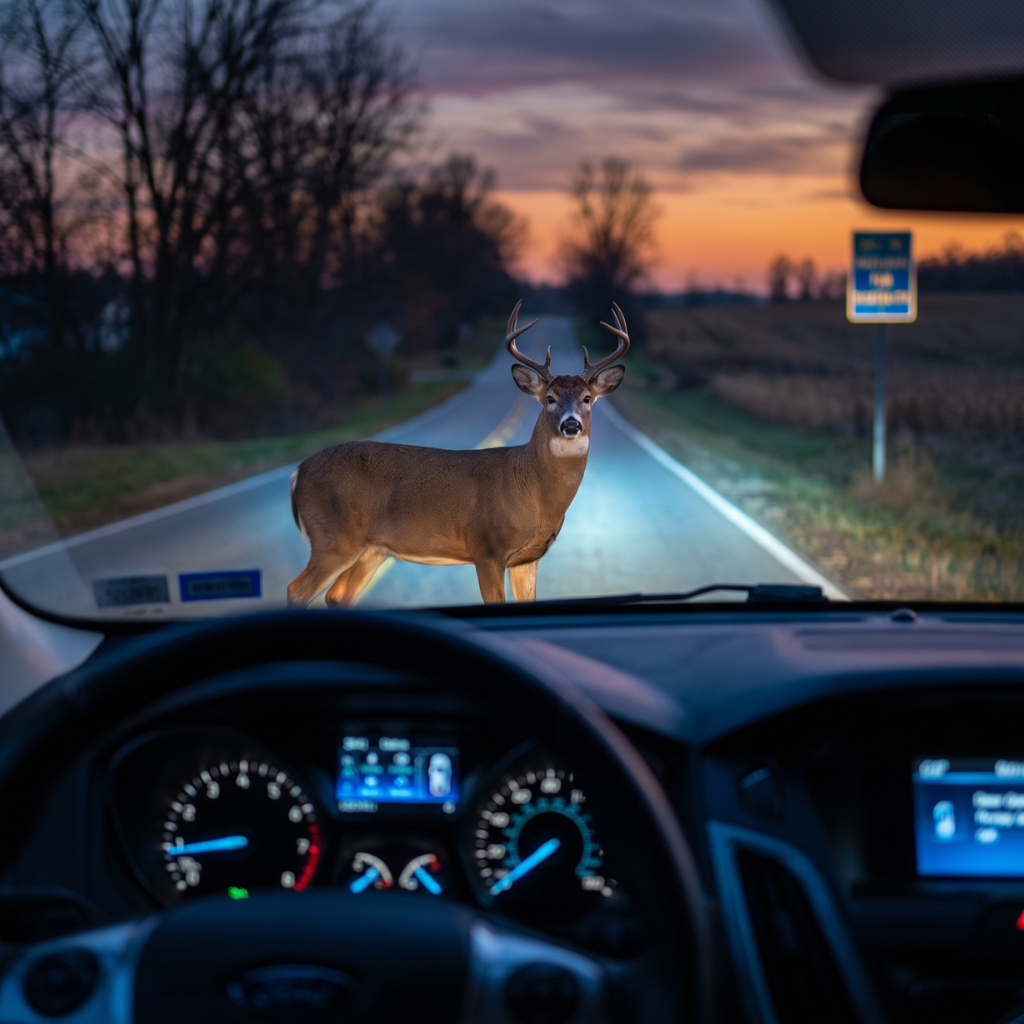
Every fall, Indiana roads become significantly more dangerous for one very specific reason: deer. As the weather cools and the days shorten, white-tailed deer begin moving more actively across roads and highways throughout the state. Indiana deer season driving carries real risks, and those risks come with a financial price tag that many drivers are completely unprepared for.
Indiana sees more than 14,000 deer-vehicle collisions every single year. The danger peaks between October and December, with the highest concentration of incidents occurring at dawn and dusk when visibility is low and deer are most active. (Purdue University | Hoosier AAA)
Here is where a very common and costly misconception comes in. Many Indiana drivers believe that having "full coverage" on their vehicle automatically means they are protected if they hit a deer. In reality, the answer to "does insurance cover hitting a deer in Indiana" depends almost entirely on whether your policy includes comprehensive car insurance. Without it, you could be left paying thousands of dollars out of pocket after a deer strike.
This guide will walk you through exactly what you need to know before deer season peaks, so you can drive with real confidence this fall.
What Happens When You Hit a Deer in Indiana? Comprehensive vs Collision Coverage Explained
The first thing to understand is what you should actually do in the moments after a deer collision, and then what happens on the insurance side of things.
If a deer runs into the road in front of you and a collision is unavoidable, Indiana safety experts recommend that you brake firmly and stay in your lane rather than swerving. This might feel counterintuitive, but swerving often leads to far worse outcomes, including running off the road, hitting guardrails, or colliding with oncoming vehicles. (Purdue Extension | Eagle Country Online)
After the collision, if your vehicle is drivable, move it safely out of traffic and turn on your hazard lights. Contact local authorities if needed, and do not approach the deer. A wounded animal can be unpredictable and dangerous. Document what you can safely from a distance. (Allstate)
It is also important to understand that deer incidents are not just about vehicle damage. Indiana State Police reporting confirms that deer-related crashes can result in serious injuries and fatalities, not just dents and scratches. In 2023 alone, Indiana recorded 16,448 deer collisions with 497 injuries and seven deaths. More recent data shows over 17,000 incidents with 707 injuries and nine deaths. (Farmers Advance | Yahoo News | Eagle Country Online)
Now, once you are safe and the dust has settled, the big insurance question becomes: which coverage type applies to your deer accident claim in Indiana?
This is where comprehensive vs collision coverage becomes critically important to understand.
Here is a simple breakdown:
Coverage Type | What It Generally Covers | Deer Scenario
Comprehensive | Damage from non-collision events, including animal strikes | Directly hitting a deer
Collision | Damage from hitting another object or vehicle | Swerving to avoid a deer and hitting a guardrail or tree
Liability-Only | Damage or injury you cause to others | Does NOT cover your own vehicle damage
When you directly hit a deer, that is typically classified as a comprehensive claim, not a collision claim. However, if you swerve to avoid a deer and then strike a tree or a guardrail, that resulting damage is usually handled as a collision claim because the vehicle hit an object, not the animal itself. (Allstate)
This distinction matters enormously and is one that many drivers do not fully understand until after a crash has already happened.
Why Comprehensive Coverage is Crucial for Indiana Drivers: Deer Collision Insurance Explained
The statistics alone make a strong case for comprehensive coverage in Indiana. With more than 14,000 deer-vehicle collisions reported annually across the state, this is not a rare or unlikely event. It is a predictable seasonal risk that affects drivers in both rural areas and suburban communities. (AOG Group | Purdue University | Hoosier AAA)
The risk is especially concentrated during fall months and low-light driving hours. Commuters heading to work before sunrise or driving home after dark during October, November, and December face the highest exposure. Rural drivers and anyone traveling through wooded or agricultural corridors face elevated risk as well. (Purdue University | Purdue Extension)
From a financial standpoint, the stakes are high. One Indiana report confirmed that deer-related vehicle damage can run up to $10,000 in repair costs. (WSBT News)
The types of damage a deer collision can cause go well beyond a dented bumper. A serious impact with a deer can result in:
- Major front-end structural damage
- Hood damage and crumpling
- Windshield cracks or shattering
- Radiator damage and engine cooling problems
- Airbag deployment
- Total vehicle loss in severe cases
When you consider that full coverage car insurance in Indiana that includes a comprehensive component can be the difference between a manageable insurance claim and a repair bill you are entirely responsible for, the value becomes very clear. Deer collision insurance in Indiana is not a luxury add-on. For many Hoosier drivers, it is essential protection.
For those with Allstate comprehensive coverage in Indiana or any other major carrier, it is worth confirming directly with your agent that your policy includes comprehensive protection and understanding exactly what your deductible is before deer season arrives.
The Risks of Liability-Only Insurance During Indiana Deer Season
If you are currently driving with liability-only coverage, this section is especially important for you to read carefully.
Liability-only insurance is designed to cover damage or injuries that you cause to other people. It protects others from you, not your vehicle from damage. That means if you hit a deer on an Indiana road tonight, liability-only insurance would generally not pay a single dollar toward repairing your car. You would be responsible for the entire repair bill out of your own pocket.
This is particularly dangerous timing for drivers relying on minimum coverage during peak deer season. As collision frequency rises sharply in October, November, and December, the odds of a deer-vehicle encounter increase substantially for every driver on Indiana roads.
Imagine driving home from work on a November evening, hitting a deer, and then finding out your animal collision claim in Indiana is denied because you only have liability coverage. The damage runs $4,000, $6,000, or even more. That financial shock is real, and it happens to Indiana drivers every fall season.
Some drivers drop comprehensive coverage to lower their monthly premiums, which is understandable when budgets are tight. However, the math can work against you quickly when you factor in the high probability of a deer-related incident during fall months. The car insurance deductible in Indiana for a comprehensive claim is typically far less painful than absorbing the full cost of a major repair on your own.
If you are unsure whether your current policy leaves you exposed, now is exactly the right time to find out.
Understanding Your Car Insurance Deductible in Indiana and How Deer Claims Affect Your Premiums
Once you confirm that you have comprehensive coverage, the next important concept to understand is your deductible. This is the amount you agree to pay out of pocket before your insurance coverage kicks in to handle the rest of a claim.
For example, if a deer strike causes $3,500 in damage and your comprehensive deductible is $500, your insurer would cover $3,000 and you would be responsible for $500. Deductibles vary by policy and are commonly structured in set increments. Many drivers choose amounts ranging from $100 to $1,000, selecting a level that balances their monthly premium cost against their comfort with out-of-pocket risk.
It is worth noting that other than collision coverage in Indiana, which is another term sometimes used for comprehensive protection, typically comes with its own deductible separate from your collision deductible. These two components of your policy operate independently.
On the question of how a deer claim affects your future premiums, the answer is: it depends. Insurers may treat a comprehensive deer claim differently from an at-fault collision claim, but whether your rates increase and by how much varies based on your carrier and their specific underwriting guidelines. A deer strike is generally considered a not-at-fault event, but it can still influence pricing with some insurers in some situations.
The best approach is to review your deductible options with your insurance agent regularly, especially before deer season, to make sure your current selection still makes sense for your budget and your risk level.
Steps to Take After a Deer Collision in Indiana: Your Deer Accident Claim Guide
Knowing what to do immediately after a deer collision can protect both your safety and your ability to file a successful deer accident claim in Indiana. Follow these steps as closely as possible.
Step 1: Move to Safety
If your vehicle is drivable, carefully move it off the road and onto the shoulder or into a safe area. Turn on your hazard lights immediately so other drivers can see you.
Step 2: Call Local Authorities if Needed
If anyone is injured, if the road is blocked, or if you need assistance, contact local law enforcement or emergency services. Follow their instructions carefully. A police report can also be helpful when filing your insurance claim.
Step 3: Do Not Approach the Deer
This is an important safety reminder that is often overlooked. A deer that has been struck may still be alive and in distress. Wounded animals can be unpredictable and dangerous. Stay away from the deer at all times.
Step 4: Document the Scene
Once you are safely out of traffic, take photos of your vehicle, the surrounding area, and any visible damage. Make note of the time, location, and conditions. This documentation supports your claim and helps your insurer process it more efficiently.
Step 5: Report the Incident to Your Insurer Promptly
Contact your insurance company as soon as possible to report the deer strike and begin the claims process. Prompt reporting helps avoid any complications and gets the process moving quickly.
If the crash involved injuries, other vehicles, or damage to property beyond your own car, additional reporting requirements may apply under standard Indiana accident procedures.
How AOG Group Can Help: Free Auto Coverage Review for Indiana Drivers
Here is an honest truth that catches many Indiana drivers off guard every single fall: a significant number of people do not realize they are missing comprehensive coverage until after a deer strike has already happened. By that point, the coverage gap has already cost them.
At AOG Group, we offer a free auto coverage review so you can find out exactly where you stand before deer season reaches its peak. The goal is simple: we want to help you answer the question "does insurance cover hitting a deer in Indiana" as it applies specifically to your current policy.
During a free review with our team, we can help you check:
- Whether you have comprehensive coverage that would apply to a direct deer strike
- What your current deductible is and whether it makes sense for your financial situation
- Whether you are relying on liability-only protection that would leave you financially exposed during peak deer season
- Whether your Allstate comprehensive coverage in Indiana or other carrier policy has any gaps worth addressing
The strongest reason to do this review is not about finding a cheaper premium. It is about making sure your policy would actually pay when something goes wrong. Far too many Indiana drivers assume they are covered for animal collisions, only to find out the hard way that their policy does not include the right protection.
A five-minute conversation with our team could save you thousands of dollars this fall. Reach out to AOG Group today to schedule your free auto coverage review.
Current Indiana Law and Insurance Requirements: What You Need to Know About Deer Strike Coverage
Indiana does have minimum auto insurance requirements for all drivers, but it is important to understand what those requirements do and do not include when it comes to deer-related incidents.
There is no special Indiana law or regulation that specifically mandates deer strike coverage as part of your auto insurance policy. The state's minimum requirements focus on liability coverage, which as we have already discussed, does not pay for damage to your own vehicle caused by a deer.
Comprehensive coverage in Indiana is optional. You are not legally required to carry it. However, the question of whether "does insurance cover hitting a deer in Indiana" is answered by whether you have voluntarily added this optional protection to your policy. Indiana drivers who rely on animal collision protection are choosing to add comprehensive coverage because it makes practical sense given the state's deer population and collision rates, not because the law forces them to.
Indiana's state guidance around deer collisions focuses primarily on prevention strategies and safe post-crash behavior. There is no special Indiana Department of Insurance rule that changes how animal collision claims are handled compared to standard comprehensive claims elsewhere in the country.
If you would like to review Indiana's general auto insurance requirements and resources, the Indiana Department of Insurance website is a useful reference for understanding the state's baseline coverage obligations.
Allstate's General Policy on Deer Strike Claims: What Indiana Drivers Should Know About Allstate Comprehensive Coverage
For drivers who carry Allstate comprehensive coverage in Indiana, understanding how deer strike claims are generally handled is an important part of being prepared.
Consistent with standard industry practice, a direct deer strike is typically classified as a comprehensive claim rather than a collision claim. Most major insurance carriers, including Allstate, align with this general approach. Comprehensive coverage is the policy component designed to handle damage from non-collision events, and a direct animal strike falls into that category.
However, it is always strongly recommended that you verify the specific details of your current Allstate policy directly with your agent or through Allstate's official resources before deer season arrives. Policy details, coverage limits, deductibles, and claims procedures can vary, and confirming the specifics with your insurer directly is the most reliable way to know exactly what you are covered for.
If you have questions about your existing Allstate policy or want help reviewing it, the team at AOG Group is available to help you navigate those details clearly and honestly.
Conclusion: Protect Yourself This Fall With the Right Deer Collision Insurance Indiana Drivers Need
Indiana's deer season is not a distant possibility or a minor inconvenience. It is a well-documented, statistically significant annual risk that puts thousands of drivers and their vehicles in harm's way every fall. With over 14,000 deer-vehicle collisions recorded in the state each year, and repair bills that can reach $10,000 or more, being caught without the right coverage is a genuinely costly mistake.
Deer collision insurance in Indiana comes down to one essential policy component: comprehensive car insurance. Liability-only coverage will not protect your vehicle. Collision coverage typically will not either, unless you swerve and hit another object. Only comprehensive coverage is specifically designed to handle the direct animal strikes that are so common in Indiana from October through December.
Now is the right time to take action. Before the peak of deer season arrives, take a few minutes to:
- Confirm that your auto policy includes comprehensive coverage
- Review your deductible to make sure it is realistic for your budget
- Identify any gaps that could leave you financially exposed after a deer strike
The AOG Group team is ready to help you with a free, no-pressure auto coverage review. We will walk through your current policy with you and make sure you understand exactly what protection you have heading into the highest-risk months of the year.
Do not wait until after a deer strikes your vehicle to find out whether you are covered. Contact AOG Group today and drive this fall with genuine peace of mind.
Frequently Asked Questions
Does "full coverage" insurance in Indiana automatically cover hitting a deer?
Not necessarily. "Full coverage" is a common term but doesn't guarantee comprehensive protection. Coverage for hitting a deer typically falls under the comprehensive portion of your policy. Always verify your specific policy details.
What should I do immediately after hitting a deer in Indiana?
Move your vehicle safely off the road if possible, turn on hazard lights, and contact local authorities if there are injuries or significant damage. Do not approach the deer, as it may be unpredictable. Document the scene with photos and contact your insurer promptly.
Is hitting a deer considered a collision or comprehensive claim?
A *direct* deer strike is typically a comprehensive claim. However, if you swerve to avoid a deer and hit another object (like a tree or guardrail), that would generally be a collision claim.
How much can deer-related vehicle damage cost?
Deer-related vehicle damage can often run up to $10,000 or more, depending on the severity of the impact. Serious collisions can result in extensive front-end damage, airbag deployment, or even total vehicle loss.
Will a deer strike claim raise my insurance premiums in Indiana?
Deer strikes are generally considered not-at-fault events, and their impact on premiums can vary by insurer and specific circumstances. It's best to discuss this with your insurance agent or review your policy details.