
Key Takeaways
- Many Indiana businesses operate personal vehicles for commercial use, mistakenly believing their personal auto policies provide coverage. This poses a significant financial risk due to specific business-use exclusions in personal policies.
- Commercial auto insurance in Indiana is specifically designed for business vehicles, accounting for various risks such as increased mileage, higher-risk situations, and cargo.
- Key differences include business-specific coverages like *Hired and Non-Owned Auto (HNOA)*, *Permanently Attached Equipment Coverage*, and *Trailer Coverage* that personal policies lack.
- Food trucks, vendor trailers, and work vans each have unique commercial auto insurance needs, often requiring tailored policies beyond general business insurance.
- Event organizers, especially for large venues like the Indiana State Fair, routinely require higher liability limits and additional insured endorsements that only commercial policies can provide.
- Misconceptions are common; even single-vehicle businesses, seasonal operators, or those with existing business owner's policies still need a dedicated commercial auto policy.
- The cost of commercial auto insurance in Indiana varies but is an essential investment to avoid devastating financial losses from denied claims.
Table of contents
- The Real Risks of Using Personal Auto Insurance for Your Business Vehicle in Indiana
- Understanding Commercial Vehicle Coverage Indiana: What Business Auto Insurance Actually Covers
- Vendor Trailer Insurance Indiana and Food Truck Coverage: Specific Business Scenarios That Require Commercial Auto
- Key Commercial Vehicle Coverage Indiana Every Business Should Have: Including Hired and Non-Owned Auto Indiana
- Indiana State Fair Vendor Insurance: What Event Operators Require and Why It Matters
- Common Misconceptions About Food Truck Insurance Indiana and Contractor Truck Insurance Indiana
- Unique Challenges for Mobile Businesses Needing Commercial Vehicle Coverage Indiana and Work Van Insurance Indiana
- What Does Commercial Auto Insurance Cost in Indiana? Delivery Vehicle Insurance Indiana Pricing Context
- How AOG Group Helps Indiana Businesses Get Commercial Auto Insurance Right
- Conclusion: Protect Your Business With the Right Coverage Before It Is Too Late
If you run a food truck, haul a vendor trailer to festivals, or drive a work van to job sites across Indiana, you are likely putting your business at serious financial risk every single day you rely on a personal auto insurance policy. Commercial auto insurance in Indiana is not just a smart choice for business owners — in most cases, it is a legal requirement.
Food truck insurance in Indiana, business vehicle insurance Indiana, and proper commercial coverage for mobile vendors are topics that do not get enough attention until something goes wrong. And by then, the damage can be devastating.
This guide will walk you through everything you need to know about protecting your business vehicles correctly — from understanding why personal auto falls short, to knowing exactly what commercial coverage you need, to getting the right policy in place before your next event or job.
The Real Risks of Using Personal Auto Insurance for Your Business Vehicle in Indiana
Many Indiana business owners assume their personal auto insurance will cover them when something goes wrong on the road. This is one of the most costly misunderstandings in small business insurance, and it affects work van insurance Indiana holders and contractor truck insurance Indiana operators alike.
Here is why personal auto coverage is structured to fail you the moment you use your vehicle for business:
Personal policies contain business-use exclusions. Most personal auto contracts include language that specifically excludes or severely limits coverage when a vehicle is used:
- To carry persons or property for a fee
- Regularly in the course of business operations
- For deliveries or transportation of goods (often called a "livery exclusion")
Insurers treat business use as a *material change in risk*. Your vehicle is being driven more miles, in higher-risk situations, and often loaded with cargo or equipment. That is a very different risk profile than driving to the grocery store.
What happens when a claim gets denied?
The consequences of a denied claim are serious and far-reaching:
- Denial of liability coverage means you personally face exposure to judgments for medical bills, property damage, and legal defense costs.
- Denial of physical damage coverage means no money to repair or replace your vehicle — which could shut your business down entirely.
Real-world patterns show exactly how this plays out:
- A delivery driver using a personal car to deliver parcels or food is in an at-fault crash. The insurer invokes the livery exclusion and denies both liability and collision coverage. The driver is left personally responsible for all damages.
- A contractor lists a pickup as "personal use" but drives it daily to job sites loaded with tools, materials, and sometimes workers. After a serious accident, the insurer finds invoices and social media evidence of business use and either denies the claim or rescinds the policy entirely due to misrepresentation. Industry guidance is clear: a personal policy will not cover a work vehicle in Indiana. If it is used for work, you need commercial auto insurance.
- A food truck owner drives to a festival event insured under a personal auto policy. After a collision en route, the insurer invokes the business-use exclusion. The vehicle is a business asset used for profit — and the personal policy never should have been in place at all.
The gaps between how a vehicle is actually used and what a personal policy actually covers are exactly where claims fall apart.
Understanding Commercial Vehicle Coverage Indiana: What Business Auto Insurance Actually Covers
So what exactly is commercial auto insurance, and how does it differ from the policy you already have?
Commercial vehicle coverage Indiana is a policy specifically designed and underwritten for business use. It accounts for the full scope of how your vehicle operates — who drives it, how far it travels, what it carries, and what risks come with those activities. Delivery vehicle insurance Indiana, food truck policies, and contractor fleet coverage all fall under this umbrella.
Here is a breakdown of the core components:
Liability Coverage
This is required by Indiana law for any vehicle on public roads. It includes:
- Bodily injury liability: Covers third-party injuries, medical bills, lost wages, and your legal defense costs when your business is at fault.
- Property damage liability: Covers damage you cause to other vehicles, buildings, fencing, or another vendor's booth.
Indiana's state minimum liability limits are $25,000 per person / $50,000 per accident / $25,000 property damage (25/50/25). These minimums apply to most small business vehicles. However, these limits can be exhausted quickly by a single serious injury — and many event contracts, landlords, and municipalities require $1,000,000 or more in liability coverage.
Collision Coverage
Pays to repair or replace your business vehicle after an at-fault crash, a single-vehicle accident, or a rollover, minus your deductible.
Comprehensive Coverage
Covers non-collision losses including theft, vandalism, fire, hail, windstorms, falling objects, and animal strikes.
Uninsured / Underinsured Motorist (UM/UIM)
Protects your business when the at-fault driver has no insurance or not enough to cover your losses. Indiana requires UM/UIM coverage unless you explicitly opt out.
Business-Specific Coverages Personal Policies Do Not Provide
This is where commercial auto really separates itself:
- Hired and Non-Owned Auto (HNOA): Covers liability when employees use their personal vehicles or rented vehicles for business purposes — running errands, making deliveries, or traveling to an event.
- Permanently Attached Equipment Coverage: Covers installed cooking equipment in a food truck or shelving systems in a work van.
- Trailer Coverage: Extends liability and optional physical damage coverage to business-owned trailers you regularly tow.
- Higher Limits with Additional Insured Endorsements: Allows you to issue Certificates of Insurance naming event organizers, landlords, or municipalities as Additional Insured — something a personal policy simply cannot do.
Vendor Trailer Insurance Indiana and Food Truck Coverage: Specific Business Scenarios That Require Commercial Auto
Understanding vendor trailer insurance Indiana and Indiana State Fair vendor insurance requirements becomes much clearer when you look at real business situations.
Food Trucks and Concession Operators
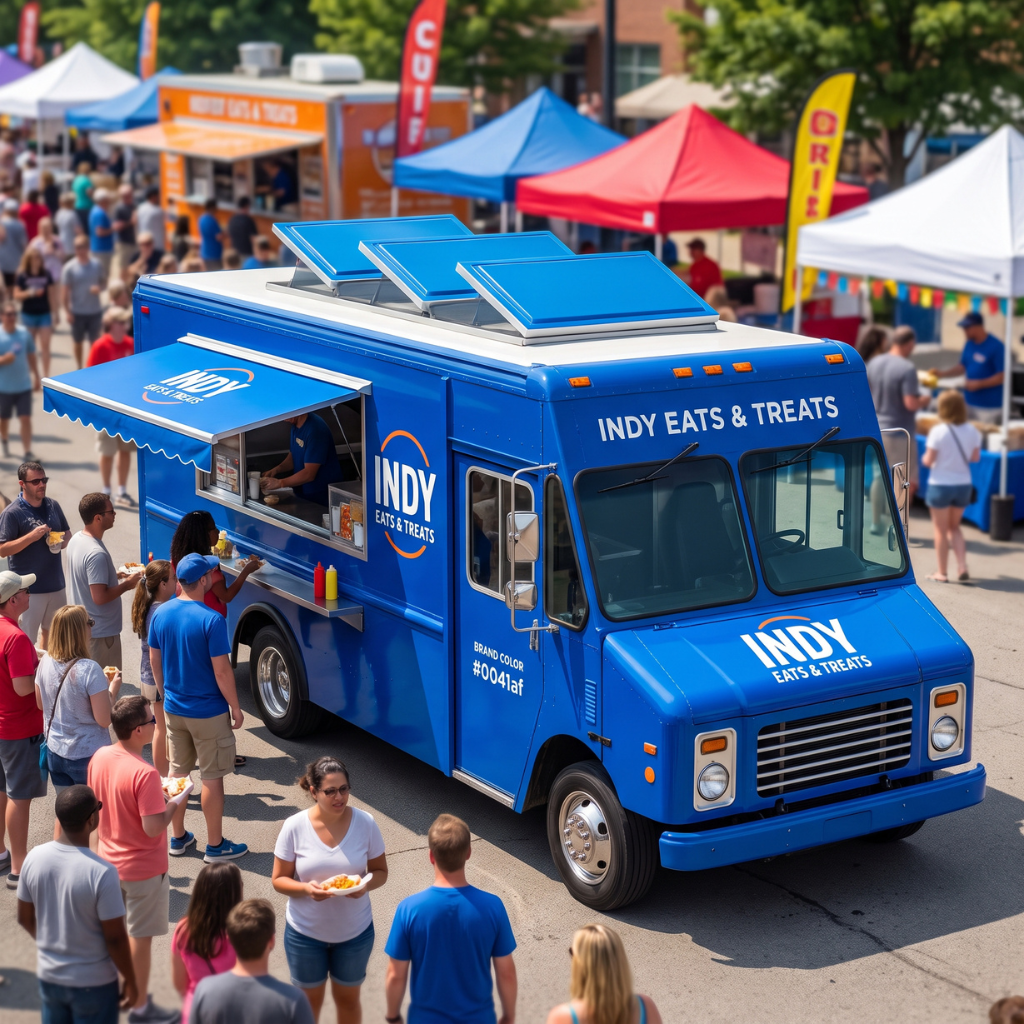
A food truck is both a vehicle and a mobile business. That dual nature creates risks on two fronts.
On the road:
- Auto liability accidents while driving to events, commissaries, or catering locations
- Property damage if the truck backs into another vendor's booth or comes close to pedestrians in a crowded parking area
At the event:
- Fire or explosion from cooking equipment spreading to nearby structures
- Foodborne illness or allergic reaction claims
- Slip-and-fall injuries near the serving window
- Theft or damage to equipment while parked overnight
A complete food truck insurance package typically includes commercial auto, general liability, product liability, inland marine equipment coverage, workers' compensation if you have staff, and business interruption coverage. Commercial auto is required by law to operate on public roads and is commonly verified during permitting and at event check-in.
Vendor Trailers: Hauling to Fairs and Festivals
Many Indiana vendors haul enclosed or open trailers filled with merchandise, craft inventory, cooking gear, or event equipment.
Here is what most vendors do not realize:
- Liability while towing: The towing vehicle's auto policy may pick up some liability for damage caused by the trailer in motion — but only if the trailer meets the policy's definition and weight thresholds. Commercial auto policies are far better suited for regular towing as part of business operations.
- Physical damage to the trailer: Personal auto policies frequently exclude or severely limit coverage for business-use trailers. A commercial policy can schedule the trailer specifically and add comprehensive and collision protection.
- Contents of the trailer: The goods and equipment inside the trailer are generally not covered by auto physical damage coverage at all. You typically need a separate inland marine or cargo policy to protect inventory and equipment in transit and at the event.
A common and expensive misconception: "If the trailer is hooked up to my truck, everything is covered." In reality, the trailer may not be scheduled, and the contents almost certainly require separate coverage.
Work Vans and Contractor Trucks
In Indiana, even a single work van used for business must be covered under a commercial auto policy. This applies to:
- Plumbers, electricians, HVAC technicians, and remodelers driving to multiple job sites daily
- Landscapers towing trailers loaded with mowers and equipment
- Local delivery services running routes throughout the week
These vehicles face higher accident frequency due to more driving, heavier loads, and frequent stops. They are often wrapped or branded, making it immediately obvious to insurers, claimants, and regulators that the vehicle is a business asset. Employees or helpers may also drive the van, which creates additional exposure that personal auto policies are not built to handle.
Key Commercial Vehicle Coverage Indiana Every Business Should Have: Including Hired and Non-Owned Auto Indiana
When building the right commercial auto program, Indiana businesses should carefully consider each of the following coverages:
- Liability (required): Indiana minimums are 25/50/25, but most businesses — especially those working with event contracts — should consider $500,000 to $1,000,000 or higher. An umbrella policy can provide additional layers of protection.
- Collision: Repairs or replaces your vehicle after an at-fault crash.
- Comprehensive: Covers theft, fire, hail, vandalism, and other non-collision losses.
- Hired and Non-Owned Auto (HNOA) Indiana: *This coverage is critical for mobile operations*. It protects your business when employees drive their own vehicles or rented vehicles for business purposes. If a team member takes their personal car to pick up supplies for a festival setup and causes an accident, your business could be liable — HNOA is what protects you in that situation.
- Trailer Coverage: Liability and physical damage for business trailers.
- Inland Marine / Equipment Coverage: Protects cooking equipment, generators, POS systems, tools, and inventory both in transit and at job sites or events.
Choosing higher liability limits is especially important for businesses that participate in fairs, festivals, and large events. Venue contracts routinely require $1,000,000 in liability, and the state minimum of 25/50/25 will not satisfy those requirements.
Indiana State Fair Vendor Insurance: What Event Operators Require and Why It Matters
For vendors operating at large events — including Indiana State Fair vendor insurance situations, county fairs, and fall festivals — the insurance requirements go well beyond what the state legally mandates for road use.
Typical requirements from event organizers include:
- Proof of commercial auto insurance for all vehicles brought on site
- General liability limits of $1,000,000 per occurrence / $2,000,000 aggregate
- The event organizer, fairgrounds, or municipality listed as Additional Insured on your liability policy
- Proof of workers' compensation if you have employees working the event
- Product liability coverage for food vendors
- Evidence of equipment or property coverage for high-value setups
Many food truck insurance Indiana resources confirm that festivals and larger venues regularly ask for $1M/$2M general liability plus proof of commercial auto — standards that go well beyond state minimums.
Why the risk is genuinely higher at large events:
- Dense crowds mean a higher chance of pedestrian injuries or property damage claims
- Vendors packed closely together increase the danger of fire or explosion spreading across multiple businesses
- Vehicles maneuvering in tight spaces near people, tents, and equipment raise auto liability exposure significantly
- A single incident — a propane leak, a foodborne illness outbreak, or a vehicle accident on the grounds — can generate multiple simultaneous claims and large settlements
Event organizers use contractual insurance requirements to shift financial responsibility back to vendors. If you show up with only a personal auto policy, you will not meet those requirements — and you may be turned away entirely.
Common Misconceptions About Food Truck Insurance Indiana and Contractor Truck Insurance Indiana
Let us address some of the most common beliefs that get Indiana small business owners into trouble.
Myth: "I only have one van. I don't need commercial insurance."
Reality: In Indiana, even a single work van used for business purposes must be covered under a commercial auto policy. The number of vehicles does not change the legal requirement.
Myth: "My personal auto covers me when I drive to jobs or events."
Reality: Personal auto policies are priced and written for non-business use. Regular business driving, deliveries, and hauling for pay are common triggers for coverage exclusions and outright claim denials.
Myth: "If my trailer is hooked up, it is automatically fully covered."
Reality: The towing vehicle may extend some liability, but physical damage to the trailer and the contents inside almost always require separate coverage — commercial auto for the trailer itself and inland marine for the goods inside.
Myth: "State minimum limits are enough."
Reality: Indiana's 25/50/25 minimums can be exhausted by a single serious injury. Many event contracts, city permits, and business landlords require $1,000,000 in liability coverage.
Myth: "Insurance follows the car, so my employees are always covered."
Reality: Employees who regularly drive for your business need to be properly listed on the policy, and you may need HNOA coverage to address situations where they drive personal vehicles on business errands.
Myth: "I am only seasonal, so I do not need full commercial coverage."
Reality: Any time your vehicle is on the road or on event grounds, you face full liability exposure. Some carriers can tailor policies to seasonal use, but they are still commercial policies — not personal ones.
Myth: "My restaurant business owner's policy covers my food truck too."
Reality: A standard business owner's policy does not replace commercial auto insurance. Driving a food truck on public roads requires a separate commercial auto policy by law.
Unique Challenges for Mobile Businesses Needing Commercial Vehicle Coverage Indiana and Work Van Insurance Indiana
Mobile businesses — food trucks, pop-up vendors, traveling contractors, mobile boutiques — face a set of insurance challenges that static businesses simply do not encounter.
Constantly changing locations. As you move between cities, counties, and event venues, your risk profile shifts. Different jurisdictions and event landlords may have different certificate requirements, and you need a policy that can flex with those demands.
Permits and licensing. Many Indiana localities and events require proof of commercial auto and general liability before they will issue operating permits. Without proper commercial coverage, you may not even be allowed to set up.
Equipment on wheels. For most mobile businesses, the majority of business value is wrapped up in mobile equipment and inventory — things that move with you everywhere you go. Static property policies are not designed to cover assets in transit. Inland marine and mobile equipment policies are far more appropriate for this kind of coverage.
Mixed personal and business vehicle use. Many owners use a personal pickup to tow a vendor trailer, or drive personal vehicles for business errands between events. This creates hired and non-owned auto exposure that needs to be formally addressed in your insurance program.
Seasonality. Indiana has a strong fair season, active fall festival circuit, and a noticeable winter slowdown. Your coverage still needs to be active when vehicles are stored — fire, theft, and vandalism do not follow your business calendar. A knowledgeable agent can help you structure coverage that fits your operational patterns without unnecessary gaps.
The critical takeaway is that your actual operations need to be perfectly aligned with how your policy classifies and covers your vehicles. Mismatches between the two are where claims get denied.
What Does Commercial Auto Insurance Cost in Indiana? Delivery Vehicle Insurance Indiana Pricing Context
Cost is one of the first questions business owners ask, and the honest answer is that it varies based on several factors: business type, claims history, type of vehicle, who drives it, how far it travels, and the limits and deductibles you choose.
That said, here are some meaningful data points to help set expectations:
- Average commercial auto cost in Indiana: Insureon reports that its Indiana small business customers pay an average of $199 per month, or $2,386 per year, for commercial auto insurance.
- Food truck commercial auto range: Industry sources cite approximately $1,200 to $2,500 per year for commercial auto coverage on a food truck specifically, with additional costs for general liability, equipment, and workers' compensation layered on top.
What affects your cost most significantly:
- Carrying only state minimum limits keeps premiums lower but leaves you exposed to large out-of-pocket losses
- Vendors who need $1,000,000 in liability to satisfy event contracts will pay somewhat more — but they are genuinely protected when something serious happens
- Combining commercial auto with general liability, inland marine, and other coverages through the right carrier can create meaningful efficiencies in your overall premium
Working with a specialist agency allows you to adjust deductibles, tailor coverage to seasonal operations, and find carrier programs that understand the specific risks of food trucks, contractors, and mobile vendors. Generic coverage from a carrier that does not specialize in your type of business can lead to both gaps in protection and unnecessarily high premiums.
How AOG Group Helps Indiana Businesses Get Commercial Auto Insurance Right
Navigating commercial auto insurance Indiana requirements on your own is possible — but it takes time, expertise, and a clear understanding of both state law and the contractual requirements of the events and clients you work with. That is exactly where AOG Group brings real value.
AOG Group works with Indiana business owners to make sure their commercial auto coverage matches how their business actually operates. Here is what that looks like in practice:
Risk Assessment
AOG Group reviews how each vehicle is used — mileage, radius of operations, what it carries, and who drives it — to ensure it is correctly classified. A misclassified vehicle is a ticking clock on a future claim denial.
Compliance and Contract Review
AOG Group makes sure your coverage meets Indiana's legal minimums and the specific requirements of the events, landlords, and business clients you work with. That means the right limits, the right endorsements, Additional Insured language, and waiver of subrogation language where required.
Coverage Design
Beyond commercial auto, AOG Group can help you build a complete program that includes general liability, product liability, and inland marine coverage so that your vehicles, your equipment, and your operations are all protected — whether you are on the road or set up at a fairground.
Cost Management
AOG Group helps you find the right balance between protection and cost. That includes recommending appropriate limits and deductibles, identifying carrier programs that specialize in mobile vendors and contractors, and structuring coverage to fit your seasonal operation when possible.
Claims Advocacy
When a loss happens, AOG Group works to make sure your claim is paid — not denied because of a business-use issue that should have been addressed in your policy structure from the start.
If you are not sure whether your current auto policy is protecting your business correctly, AOG Group offers no-obligation insurance reviews for Indiana business owners. It takes far less time to review your coverage now than it does to recover from a denied claim later.
Conclusion: Protect Your Business With the Right Coverage Before It Is Too Late
Whether you are managing food truck insurance Indiana requirements, protecting a contractor truck insurance Indiana operation, or making sure your vendor trailer is fully covered on the way to the State Fair, the message is the same: personal auto insurance is *not designed for business use*, and the consequences of relying on it can be financially devastating.
Commercial auto insurance is not just a legal requirement in Indiana — it is the foundation of a stable, protected business. It ensures that when something goes wrong on the road, at an event, or on a job site, your coverage actually responds instead of leaving you personally exposed.
Every day you operate a business vehicle without the right commercial policy is a day of unnecessary risk.
Contact AOG Group today for a free, no-obligation commercial auto insurance review. Our team will assess how your vehicles are actually being used, identify any gaps in your current coverage, and help you build a protection plan that keeps your business moving forward — no matter what the road brings.
Frequently Asked Questions
Do I need commercial auto insurance if I only use my vehicle for business occasionally?
Yes, in most cases. Even occasional business use of a vehicle can trigger exclusions in your personal auto policy. Insurers classify any use for revenue generation, deliveries, or transportation of goods/people for a fee as commercial use. To ensure proper coverage and avoid denied claims, a commercial auto policy is necessary regardless of frequency.
What are the minimum commercial auto liability limits in Indiana?
The state minimum liability limits in Indiana for vehicles on public roads are $25,000 for bodily injury per person, $50,000 for bodily injury per accident, and $25,000 for property damage (25/50/25). However, many businesses, especially those working with events or contracts, will need significantly higher limits (e.g., $500,000 to $1,000,000) to meet contractual obligations and adequately protect their assets.
Will my personal auto policy cover my food truck if it's involved in an accident?
Highly unlikely. Personal auto policies almost universally contain explicit "business-use exclusions" or "livery exclusions" that deny coverage for vehicles used to generate income or transport goods for a fee. A food truck is considered a business asset used for profit, making a commercial auto insurance policy a legal and financial necessity for operation.
What is Hired and Non-Owned Auto (HNOA) coverage and why is it important for my Indiana business?
Hired and Non-Owned Auto (HNOA) coverage protects your business from liability when employees use their *personal vehicles* or *rented vehicles* for business purposes (e.g., running errands, making deliveries, client visits). If an employee causes an accident in their personal car while performing a business task, your business could be held liable. HNOA covers this critical gap, which is not addressed by standard personal or commercial auto policies.
Why do event organizers require higher liability limits than the state minimum?
Event organizers face significant liability exposure (e.g., dense crowds, potential for large accidents, property damage, foodborne illness). By requiring vendors to carry higher liability limits (often $1,000,000 per occurrence), they ensure that if an incident occurs involving your business, there is sufficient insurance coverage to address the damages. This protects the organizer, the venue, and ultimately, your business from potentially catastrophic lawsuits.